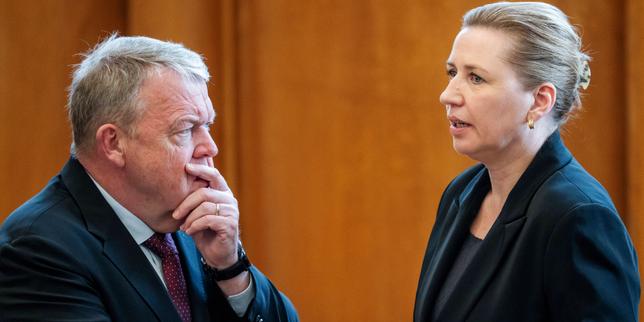
Stop romanticizing the Danish parliament as a high-minded coffee klatch where everyone wins. Foreign observers and fans of political dramas like Borgen have spent a decade hallucinating a version of Copenhagen that doesn't exist. They see a "culture of compromise" and mistake it for peace.
It isn't peace. It’s a high-stakes hostage situation that happens to produce stable laws.
The lazy consensus among political analysts is that Denmark’s multi-party system and its reliance on "negative parliamentarism" is a beacon of democratic maturity. They claim it’s a system designed to foster—to use a word I despise—collaboration. Wrong. The Danish system is designed to weaponize instability. It forces parties into a room not because they want to work together, but because the alternative is total legislative paralysis that would see them punished by an electorate that has zero patience for grandstanding.
The Myth of the Gentle Coalition
The international press loves to look at the Folketing and see a polite assembly of 179 members. They marvel at how a government can function without a majority. In Denmark, a government doesn't need a majority to support it; it just needs a majority that doesn't actively vote to kill it.
This is "negative parliamentarism." Critics and outsiders view this as a way to ensure broad support. In reality, it is a mechanism for legislative blackmail. Small, fringe parties on the far left or right hold the "kingmaker" position, not because they have the best ideas, but because they are willing to threaten the entire budget over a single, niche policy.
If you think this is a "model" for the world, you haven't seen a Danish Prime Minister try to pass a reform package while being squeezed by a party that only represents 2% of the population. It’s not a "masterclass in negotiation." It’s an exercise in survival.
Efficiency Is a Lie (And That’s the Point)
We are told that coalition governments are more representative and therefore better. This is the participation trophy of political science.
When you have a government like the current one in Denmark—a rare "broad" coalition across the center—you don't get the best of both worlds. You get the diluted leftovers of both. You get "The Great Compromise," which usually translates to "The Great Stagnation."
- The Problem: Parties spend more time managing their partners than managing the country.
- The Result: Policy "mush" where no one gets what they voted for, but no one is angry enough to riot.
I have watched organizations try to mimic this "Danish style" of management. They think that by bringing every department into every decision, they are being inclusive. What they are actually doing is building a suicide pact. When everyone has a veto, nothing moves. Denmark’s system works despite this, only because of a very specific, culturally ingrained pragmatism that cannot be exported. You can't copy the Danish coalition model without the Danish tax-paying mindset, which is essentially a form of national Stockholm Syndrome.
Why Your "Coalition" Brain Is Broken
Most people ask the wrong question: "How can we get our politicians to cooperate like the Danes?"
The question you should be asking is: "Why are we so afraid of a clear winner?"
In a two-party system, you know who to blame. In the Danish model, accountability is a shell game. If the economy dips or healthcare wait times spike, the lead party blames their support partners, the support partners blame the "broad agreement," and the voter is left screaming into a pillow.
This isn't a bug; it's a feature. The system is built to diffuse blame. By the time a law is passed in Denmark, it has been touched by so many hands that no single person is responsible for its failure. This is great for politicians who want to keep their jobs for twenty years. It is terrible for radical, necessary change.
The Hostage Negotiator as Prime Minister
Managing a Danish coalition isn't about leadership. It's about being a world-class hostage negotiator.
Imagine a scenario where you are running a multi-billion dollar tech firm. You have a vision for a radical new AI integration. But, to get it past the board, you have to agree to give the accounting department veto power over the UI design, and the janitorial staff gets to decide which coding language you use.
That is the daily life of a Danish PM.
They aren't leading a nation toward a bright future; they are navigating a minefield with a map drawn by their enemies. The "art" of the coalition is actually the art of the bribe. "I'll give you your niche environmental tax if you let me pass my labor reform." It’s a series of transactional trade-offs that often lack a coherent North Star.
The Hidden Cost of the "Middle Ground"
The world looks at Denmark's high taxes and high services and thinks, "See? The coalitions work!"
They are missing the causality. The high-trust society existed before the complex coalition mechanics. The political system is a byproduct of a small, homogenous population that generally agrees on 80% of things anyway. Try dropping this system into a country with real ideological divides—like the US, France, or even the UK—and you wouldn't get a "stable coalition." You would get a civil war with better furniture.
The "lazy consensus" is that more voices in the room lead to better outcomes. History—and the reality of the Danish legislative grind—suggests otherwise. It leads to the "lowest common denominator" outcome.
Stop Calling It "Borgen"
Borgen is to Danish politics what Top Gun is to being a flight instructor. It’s a stylized, hyper-dramatic version of a much more boring and cynical reality.
In the show, Birgitte Nyborg makes tough choices based on her soul. In the real Christiansborg, choices are made based on who is threatening to pull their support at 11:00 PM on a Tuesday. It’s less about "the soul of the nation" and more about the "math of the seats."
If you want to understand how power actually works, stop looking for "synergy" and start looking for "leverage."
Denmark has mastered the art of leverage. Every party, no matter how small, knows exactly where the Prime Minister’s pressure points are. The stability people admire isn't the result of shared values; it's the result of mutual assured destruction.
The Advice You Don't Want to Hear
If you are a leader, do not try to build a "Danish-style coalition" in your business or your local government. You will end up with a committee-driven nightmare where innovation goes to die in a pile of "minutes from the last meeting."
Instead:
- Demand a Mandate: If you don't have the power to execute, don't take the job.
- Beware the Kingmakers: Identify the small players who hold disproportionate power and neutralize them early.
- Value Conflict Over Compromise: A clear, polarizing direction is almost always better than a lukewarm consensus that satisfies no one.
The Danish model is a fascinating relic of a high-trust society trying to manage its own slow decline through extreme bureaucracy. It is not a blueprint for the future. It is a warning about what happens when you prioritize "getting along" over "getting it right."
Politicians don't need more "dialogue." They need the courage to win or the grace to lose. The middle ground is where ideas go to be buried in an unmarked grave.
Stop looking for the Danish secret. The secret is that they’re just as frustrated as you are; they’re just better at hiding it behind a plate of Smørrebrød.