The scent of hot asphalt and sage shouldn’t feel like a red carpet, but in South Los Angeles, it’s the only one that matters.
Marcus stands on the corner of Slauson and Crenshaw, his eyes squinting against the golden hour glare that turns the city's power lines into glowing threads. He’s twenty-two. He has a camera that he bought with three months of grocery-bagging wages and a hard drive full of stories that Hollywood usually tells with sirens and yellow tape. But today, the tape isn't yellow. It’s a velvet rope, or at least a neighborhood version of one.
For decades, the stories of South Central were exported, processed, and sold back to the world by people who had never stood at a bus stop on Western Avenue. The "neighborhood film" became a genre of trauma—a cinematic shorthand for struggle. But a quiet, fierce movement is reclaiming the lens. A local film festival isn’t just an event here. It is an act of reclamation. It is a way of saying that the beauty of a backyard barbecue or the specific geometry of a lowrider’s chrome is as worthy of the silver screen as any space odyssey or period drama.
The Architecture of Exclusion
To understand why a neighborhood film festival is a lifeline, you have to understand the wall. Not a physical wall of brick, but a systemic one built of gatekeepers and zip codes.
Traditionally, the path to filmmaking requires a "pipeline." You go to the right school, you intern for free in a high-rise in Burbank, and you hope someone with a lanyard notices your talent. For a kid in South Central, that pipeline is often a dry pipe. The cost of entry isn't just tuition; it’s the invisible tax of being an outsider in your own city.
When major studios want to film in these streets, they bring trucks. They bring generators. They bring security. They shut down the local shops, capture the "aesthetic" of the neighborhood, and then they leave. The residents watch from behind the barricades. They see their homes used as backdrops for stories they didn't write.
This creates a vacuum of identity. If you only see yourself through the eyes of a stranger, you start to believe the stranger’s version of your life. You begin to think your reality is only valid when it’s tragic.
Turning the Camera Around
Consider the difference between a "hood movie" made by an executive in a glass office and a short film made by a girl who lives three doors down from the local park.
The executive sees the graffiti and thinks danger. The girl sees the graffiti and recognizes the tag of a friend who passed away last summer. She sees the memorial. She sees the art. Her camera lingers on the way the light hits the spray paint at noon. That is the human element. That is the texture of life that cannot be faked.
The South-Central film festival serves as a sanctuary for these specific, granular truths. It’s a space where a filmmaker can submit a piece about the silent struggle of a grandmother keeping her garden alive in a heatwave, and the audience won't ask where the "action" is. They will nod. They will see their own grandmothers.
This isn't about "diversity" as a corporate buzzword. It’s about accuracy. It’s about the fact that 10% of the population shouldn't be responsible for narrating 100% of the culture. When the neighborhood creates its own space, the stakes change. The goal isn't just to get a distribution deal; it’s to be witnessed by the people who share your sun and your shadows.
The Invisible Stakes of Representation
We often talk about media representation as if it’s a luxury. It isn’t. It’s a psychological necessity.
Imagine growing up in a house where every mirror was warped. Every time you looked at yourself, your nose looked too big, your eyes looked too small, and your skin looked like a different color. Eventually, you would forget what you actually looked like. You would start to move and act based on the warped image.
South Central has been looking in warped mirrors for a century.
A local festival provides a flat, clear mirror. It allows the community to see its own joy, its own mundane Tuesdays, and its own complex victories. When a young filmmaker sees their work projected onto a screen in their own zip code, something in the brain shifts. The distance between "me" and "creator" vanishes.
The festival doesn't just show movies; it creates a lineage. It says to the kid with the iPhone: Your perspective is the primary source. Everyone else is just a guest.
The Economic Engine of the Soul
Beyond the emotional resonance, there is a hard, practical truth: creativity is a resource.
For too long, the creative talent of South Los Angeles has been a raw material that was extracted and refined elsewhere. The neighborhood provided the slang, the fashion, the music, and the "vibe," while the profits and the credit flowed north toward the Hollywood sign.
By establishing a localized hub for film, the community keeps the "value-add" at home. It fosters a network of cinematographers, editors, and writers who can collaborate without needing permission from a studio head. They share equipment. They swap trade secrets. They build a localized economy of imagination.
This is the antidote to gentrification of the mind. If you own your stories, you are harder to displace. You have a recorded history that says, "We were here, and this is how we saw it."
A New Kind of Red Carpet
Back on the corner, the sun has finally dipped below the horizon, leaving a purple bruise across the sky. The makeshift theater is filling up.
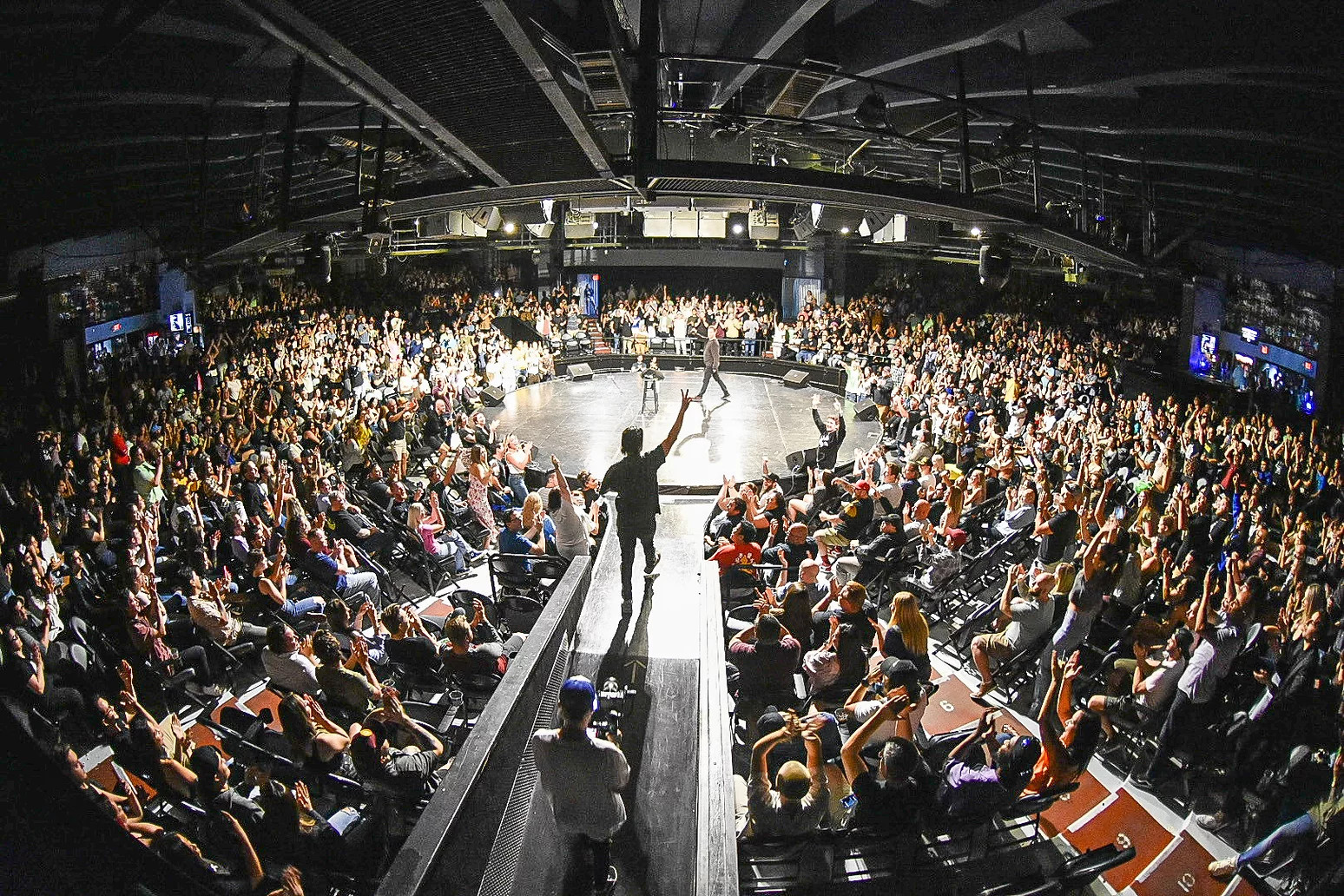
There are no tuxedoes here. There are hoodies, work boots, and Sunday dresses. There is the smell of popcorn mixed with the scent of street tacos from the vendor on the corner. The screen is a stretched sheet or a rented LED wall, but the silence that falls when the first frame appears is as heavy and holy as any premiere at the Chinese Theatre.
A short film begins. It’s a story about a young man trying to find a specific type of flower for his mother’s birthday, navigating the complexities of public transit and the shifting borders of local blocks. It’s simple. It’s quiet. It’s beautiful.
In the middle of the screening, a siren wails a few streets over. In a Hollywood movie, this would be the cue for a chase scene. Here, nobody flinches. It’s just part of the soundtrack. The audience stays locked on the screen, watching the young man finally find the flower.
They aren't looking for an escape. They are looking for an encounter.
The lights come up, and the filmmaker—a shy teenager who lives two blocks away—stands up to take a bow. He isn't a "neighborhood creative" in that moment. He isn't a statistic or a diversity hire. He is a chronicler. He is the person who looked at a mundane walk to a flower shop and saw a miracle.
As the crowd spills out into the night, the conversation isn't about camera specs or box office potential. It’s about the way the light looked on the bus window. It’s about the lady who sold the flowers. It’s about the fact that for ninety minutes, the world saw South Central exactly the way South Central sees itself.
The camera is no longer a weapon or a tool of surveillance. It’s a bridge.
The flicker of the projector dies out, but the warmth on the sidewalk remains, a lingering heat from a fire that the neighborhood started itself, simply because they were tired of waiting for someone else to bring the light.