A liquid nitrogen tank does not scream when it fails. It doesn't even whisper. It sits in a sterile room, a silver sentinel holding the genetic blueprints of a thousand potential lives, and it stays perfectly, terrifyingly silent. For the families who trusted the Center for Reproductive Medicine in Mobile, Alabama, that silence has become a deafening roar.
What started as a premier destination for hope—a place where science met the deepest human desire to create—has collapsed into a graveyard of litigation and shuttered windows. The clinic’s recent closure isn't just a business failure. It is the end of a long, agonizing slide into a nightmare that every prospective parent fears.
Imagine, for a moment, a couple we will call Sarah and Mark. They aren’t real in the legal sense, but they are every person who walked through those clinic doors. They spent years saving money, skipping vacations, and working double shifts. They endured the bruises of hormone injections and the emotional whiplash of every "maybe." Finally, they had them: three viable embryos. To Sarah and Mark, those weren't clusters of cells. They were Sunday mornings, first days of school, and a legacy left behind.
Then came the day the glass broke.
The Breach of the Inner Sanctum
The trouble at the clinic didn't begin with a financial ledger. It began with a security breach so mundane it feels like a dark comedy. In December 2020, an unauthorized individual managed to enter the cryogenic storage area. This person reached into a tank and, likely burned by the extreme sub-zero temperatures of the liquid nitrogen, dropped the containers.
The embryos were lost. Destroyed.
The physical loss was immediate, but the legal and existential fallout was only just beginning. When the families sued, the case wound its way through the Alabama court system, eventually landing at the state’s Supreme Court. The resulting ruling shook the foundations of reproductive medicine across the country. By declaring that frozen embryos are "extrauterine children" under the state's Wrongful Death of a Minor Act, the court didn't just address a mistake; it redefined the status of every frozen cell in the state.
Physicians were suddenly terrified. If a lab technician accidentally bumped a tray, were they now facing a potential murder charge? If an embryo failed to thaw correctly—a common biological reality—was the clinic liable for a death?
The Center for Reproductive Medicine found itself at the epicenter of a hurricane it could no longer navigate.
The Financial Rot Beneath the Science
While the legal battle made headlines, the clinic’s internal structure was already buckling. Fertility medicine is an expensive, high-stakes industry. It requires specialized equipment, elite staffing, and, perhaps most importantly, ironclad insurance.
Once the court ruling classified embryos as children, the insurance industry reacted with the cold efficiency of an algorithm. Risk profiles skyrocketed. Coverage became either impossibly expensive or entirely unavailable. A clinic that cannot insure its doctors or its storage tanks cannot operate.
The closure of the Mobile clinic is a study in the "invisible stakes" of the IVF world. When a standard medical facility closes, patients find a new doctor. When an IVF clinic closes amidst a legal firestorm, the "patients" are often frozen in time. Families were left scrambling, wondering if their remaining embryos were safe, if they could be moved, and who would be responsible for them if the power went out and the staff went home for good.
Money is often viewed as a secondary concern in stories of the heart, but here, it was the executioner. The clinic cited "legal and financial hurdles" as the reason for its permanent shutdown. It is a sterile phrase that masks a messy reality of mounting legal fees, fleeing investors, and a brand that had become synonymous with a catastrophic error.
The Biology of Grief
To understand why this matters, one must understand the fragility of the process. IVF is not a factory line. It is a delicate dance of timing and temperature.
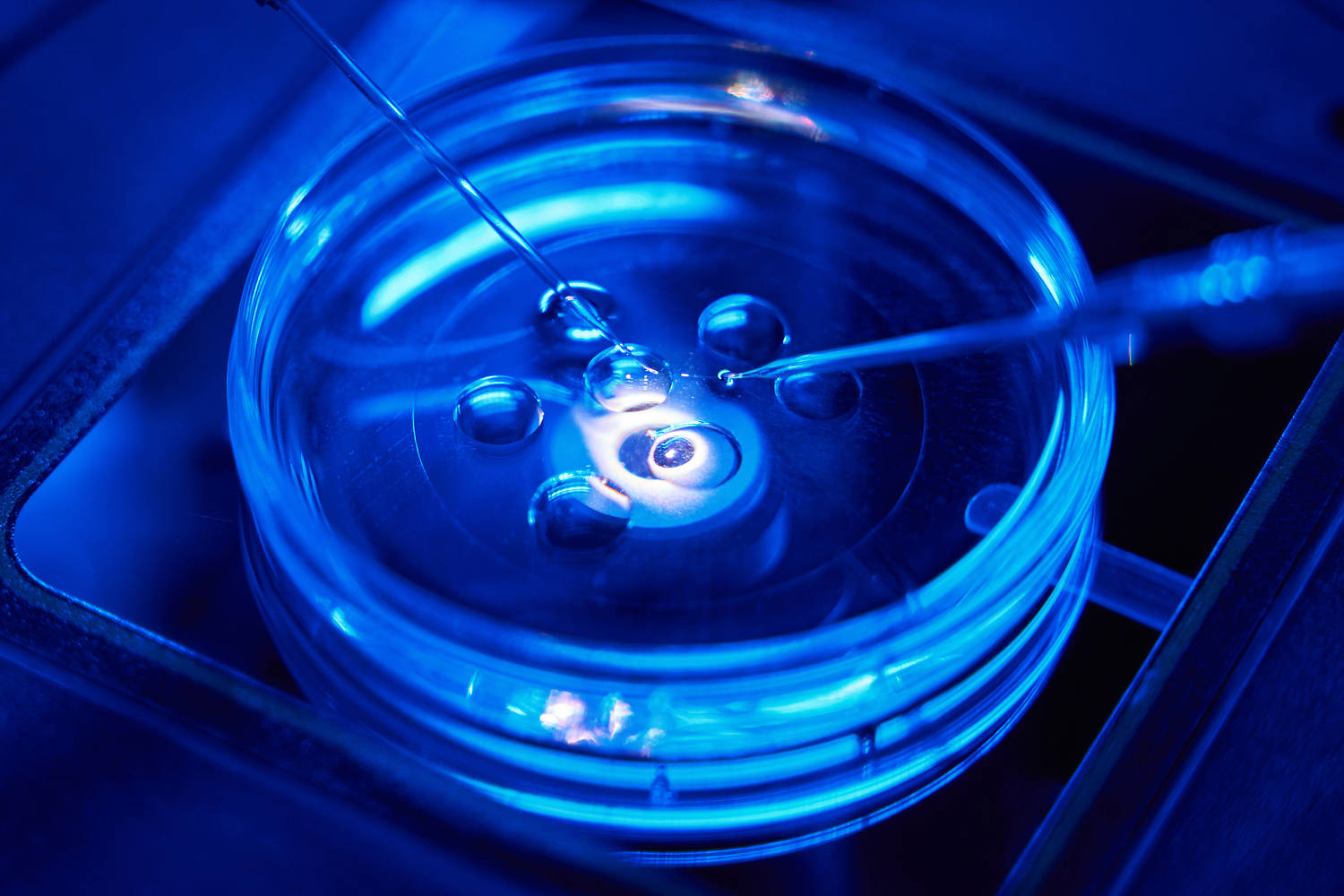
The lab is the heart of the operation. Here, an embryologist uses a needle thinner than a human hair to inject a single sperm into an egg. It is a moment of profound technical skill. But once that embryo is created, it enters a state of suspended animation. It is tucked away in a dewar, a vacuum-sealed flask designed to keep the contents at -196 degrees Celsius.
At that temperature, biological time stops.
The tragedy in Alabama was that the "stop" became permanent. The metaphor of the "broken vessel" is literal here. When the containers hit the floor, the thermal shock was absolute. There is no "fixing" a thawed embryo. There is only the realization that the future you had carefully tucked away in a silver tank has evaporated into the clinical air.
The Ripples Across the Map
The closure of this single clinic has sent tremors through the entire medical community. It has forced a conversation about the intersection of personhood and pathology.
If we treat every embryo as a legal person, the entire infrastructure of modern fertility care begins to dissolve. Doctors in Alabama and beyond are now looking at their storage tanks not as vessels of hope, but as liabilities that could end their careers. This is the paradox of the Alabama ruling: in an attempt to "protect" life, the court has made it significantly harder for people to create it.
We are seeing a migration of reproductive care. Families who can afford it are moving their embryos to "safe" states—places where the legal status of cryopreservation is clearly defined and protected. But what about the families who can’t? What about the Sarahs and Marks who spent their last cent on that one cycle in Mobile?
They are left in a landscape of uncertainty.
The departure of the Center for Reproductive Medicine leaves a void in the region. It isn't just about one less office in a medical park. It is about the loss of specialized knowledge and the narrowing of options for people struggling with infertility. When a clinic closes under these circumstances, the trust between the patient and the institution isn't just broken; it is incinerated.
The Ghost in the Lab
Walk past the building today and you see nothing but locked doors and a quiet parking lot. There are no protestors, no cheering crowds. Just the stillness of a failed enterprise.
But inside, the ghosts of "what if" remain.
Every empty incubator represents a conversation that will never happen. Every disconnected computer contains a list of names—people who were waiting for a phone call that would change their lives, only to receive a letter telling them the doors were closing.
The failure of the clinic is a cautionary tale about the intersection of ideology and industry. When the law shifts beneath the feet of medicine, the fallout is rarely contained to the courtroom. It spills into the lives of ordinary people who just wanted a chance to hold a child.
We often talk about "the sanctity of life" in abstract, soaring terms. But for the families in Mobile, the reality was much more grounded. It was about a tank, a handle, a floor, and the sudden, freezing realization that the thing they loved most was gone before it ever had a chance to begin.
The tanks are empty now. The nitrogen has dissipated. All that remains is the cold.