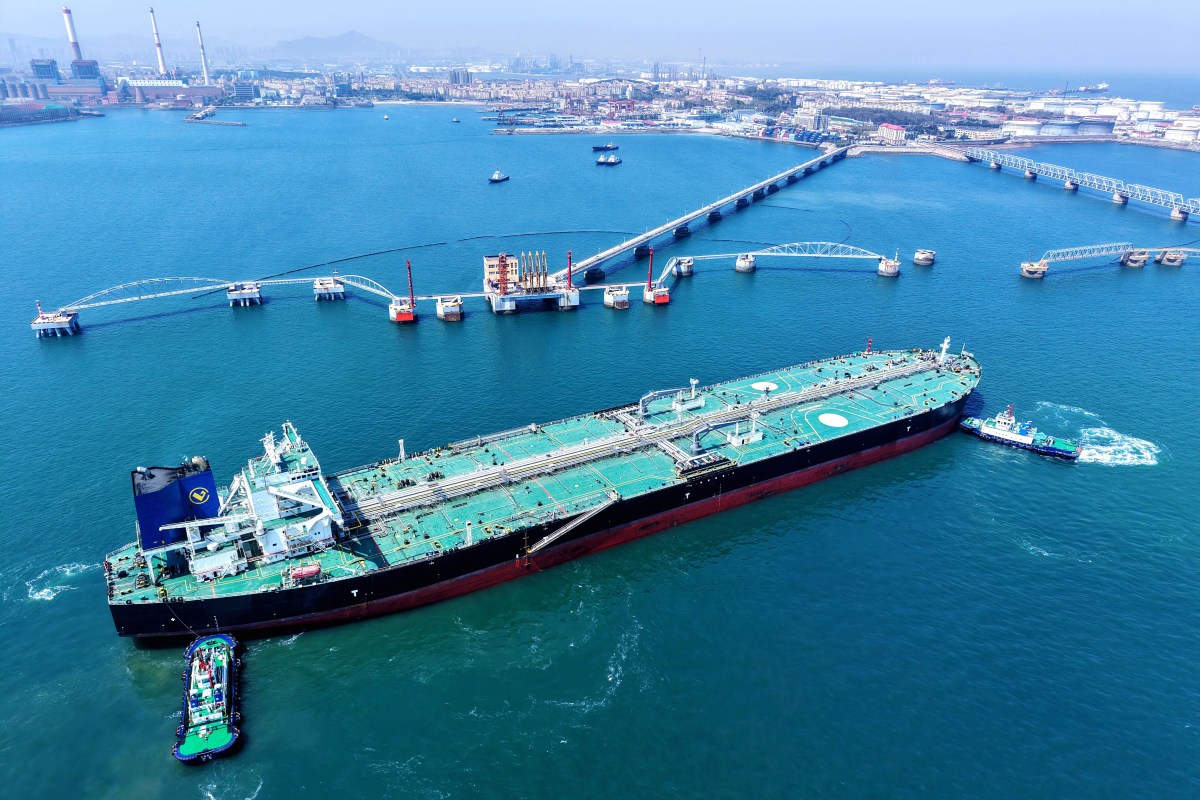
The Strait of Hormuz is currently a massive parking lot for Chinese oil tankers and it’s not because they’ve run out of fuel. Despite explicit assurances from Tehran that Chinese-flagged vessels would enjoy safe passage through one of the world’s most volatile maritime chokepoints, the ships aren't moving. You’d think a "green light" from the regional power would be enough to get the engines turning, but the reality on the water is far more complicated than a diplomatic handshake.
Shipping data shows a cluster of VLCCs (Very Large Crude Carriers) and smaller tankers idling just outside the strait. They’re waiting. They’re watching. And they’re ignoring the "all clear" from Iranian officials. This isn't just a minor logistical hiccup; it’s a high-stakes standoff between geopolitical promises and the cold, hard reality of maritime insurance and physical risk. If you’re wondering why the world’s second-largest economy is hesitant to take Iran at its word, you have to look at the gap between political rhetoric and the actual safety of a billion-dollar cargo.
The gap between Tehran's word and the captain's reality
Iran has been vocal about its desire to keep trade flowing with its biggest customer. China buys roughly 90% of Iran's exported crude, mostly through "dark fleet" transfers or re-branded shipments. So, when Tehran says Chinese ships are safe, they mean it—from their own perspective. They won't seize them. They won't harass them. But that’s only half the battle.
The problem is that a guarantee from Iran doesn't protect a ship from a stray missile, a sea mine, or a misidentification by a third-party actor. Tanker captains aren't just worried about the Iranian Revolutionary Guard; they’re worried about the entire ecosystem of conflict currently simmering in the Middle East. A "safe passage" note from one side doesn't mean much when the other side—or its proxies—might have a different target list. It’s a classic case of political signaling failing to meet the threshold of operational security.
Insurance markets are the real gatekeepers
Ship owners don't just care about what a government says. They care about what their insurers say. Most of these vessels are tied to complex international insurance pools. Even if a Chinese state-owned enterprise owns the hull, the "War Risk" premiums for entering the Persian Gulf have skyrocketed.
When a region is designated a high-risk zone by the Joint War Committee (JWC) in London, the rules change. Premiums can jump to 1% of the ship's value for a single seven-day transit. For a $150 million tanker, that’s a $1.5 million surcharge just to pull up the anchor. If the insurance companies haven't seen a tangible decrease in kinetic threats, they don't lower the rates. China’s "special status" in Tehran hasn't translated into a discount at Lloyd’s of London. This financial barrier is doing more to halt traffic than any naval blockade could.
Lessons from the Tanker War era
History repeats itself, usually with more expensive equipment. During the 1980s "Tanker War" between Iran and Iraq, hundreds of merchant ships were attacked. Even then, "neutral" ships were hit constantly. The lesson learned by the shipping industry back then was simple: there's no such thing as a safe lane in a narrow sea during a regional conflict.
Current satellite imagery confirms that Chinese vessels are adopting a "wait and see" posture. They’re hovering in the Gulf of Oman, effectively using the open sea as a buffer. It’s a direct snub to the idea that diplomatic alignment equals physical safety. It also highlights a shift in Beijing’s risk tolerance. In previous years, China might have pushed through to maintain the flow of energy. Now, with a cooling domestic economy and a desire to avoid a high-profile maritime disaster, they’re playing it safe.
The miscalculation of Iranian influence
Tehran likely expected that its public assurances would be enough to stabilize the flow of goods and maintain its economic lifeline. They underestimated the autonomy of global shipping giants. Even Chinese state-linked firms like COSCO operate with a degree of commercial pragmatism. They aren't going to risk a total loss of a vessel and an environmental catastrophe just to prove a diplomatic point.
The refusal of these ships to move suggests that China's influence in the region has its limits. Beijing can broker peace deals between Riyadh and Tehran, but it can’t wish away the tactical dangers of a narrow waterway filled with drones and fast-attack craft. It’s a humbling moment for those who thought China’s unique relationship with Iran would insulate it from the chaos of the Middle East.
What this means for global oil prices
If these ships stay anchored, the supply chain tightens. While there isn't a global shortage of crude yet, the "Hormuz Risk Premium" is being baked into every barrel. Every day a VLCC sits idle is a day that millions of barrels don't reach refineries in Ningbo or Shanghai. This creates a bottleneck that eventually hits the pump.
The market hates uncertainty. The fact that even "friendly" ships are scared to move tells traders that the risk is higher than the headlines suggest. We’re looking at a situation where the physical movement of oil is decoupled from the political agreements meant to facilitate it. That’s a dangerous precedent for global energy security.
Tracking the next move on the water
Keep an eye on the "Automatic Identification System" (AIS) data for the vessels currently loitering near the Fujairah anchorage. If we see a sudden movement of multiple ships at once, it likely means a private security deal or a naval escort has been arranged. Until then, the ships will stay put.
The smart move for observers is to stop listening to the press releases from foreign ministries and start watching the transponders. If you want to know how dangerous a conflict zone really is, don't ask a politician. Ask the person responsible for a $200 million cargo. Right now, those people are saying "no thanks" to Iran’s invitation.
Monitor the daily "Notice to Mariners" issued by the UK Maritime Trade Operations (UKMTO). If the frequency of "suspicious approach" reports drops, the Chinese fleet will move. Until that data shifts, the Strait of Hormuz remains a no-go zone, regardless of what the diplomats claim.