The consensus is in, and it is dangerously wrong.
Pundits are currently obsessed with a tidy, linear narrative: A massive conflict involving Iran triggers a global energy shock, oil prices rocket toward $150, and China—the world’s undisputed factory for solar panels and EV batteries—emerges as the sole victor. They argue that as the West bleeds capital at the gas pump, Beijing tightens its grip on the "green" transition.
This logic is lazy. It assumes that market dominance in manufacturing translates directly to strategic invulnerability. It ignores the reality of supply chain physics and the brutal math of energy density.
China isn't winning the clean tech race because of a superior long-term vision. It is winning because it has socialized the cost of overproduction and bet the house on a global stability that no longer exists. If the Strait of Hormuz closes, the "green" miracle doesn't accelerate; it chokes.
The Solar Glut is a Symptom of Failure Not Strength
The primary argument you'll hear is that China’s massive scale in photovoltaics (PV) creates an insurmountable moat. I have seen the balance sheets of these "tier one" manufacturers. They aren't printing money. They are burning it.
China has flooded the world with cheap panels, driving prices down by nearly 50% in some segments over the last year. This isn't a brilliant predatory pricing strategy to kill off Western competition—though that is a convenient side effect. It is a desperate attempt to maintain employment levels and service massive corporate debt.
When a war in the Middle East spikes the cost of everything, the demand for capital-intensive infrastructure projects in the West doesn't go up; it vanishes. High interest rates are the natural predator of the renewable transition. Solar projects are front-loaded with CAPEX. If an Iran-driven crisis keeps inflation sticky and rates high, the "advantage" of having a billion unsold panels in a warehouse in Jiangsu becomes a massive financial liability.
The Hidden Oil Dependency of "Clean" Tech
There is a glaring irony in the claim that an oil crisis helps China's green sector. You cannot build a wind turbine or a lithium-ion battery without staggering amounts of fossil fuels.
- Metallurgy: Refining the high-purity silicon for solar cells requires constant, high-intensity heat usually provided by coal or gas.
- Petrochemicals: Every EV on the road is packed with plastics, synthetic rubber, and carbon-fiber composites derived directly from oil.
- Logistics: China’s dominance relies on the "just-in-time" delivery of raw materials from Africa and South America. These supply lines are the first to break when maritime insurance premiums triple due to regional warfare.
If the Middle East burns, the cost of the inputs for "clean" tech rises faster than the price of the finished goods. China is currently trapped in a low-margin manufacturing cycle. They are importing expensive energy to export cheap technology. That is not a recipe for a superpower transition; it’s a recipe for a margin squeeze that could collapse their industrial banking core.
The Great Battery Myth
"China controls the batteries, so they control the future of mobility."
I’ve spent years analyzing the chemistry of these cells. The current LFP (Lithium Iron Phosphate) dominance is a race to the bottom. While China produces the most batteries, they are increasingly tied to a technology that is hitting its theoretical limit.
A global energy crisis caused by an Iran war would force the West to do something it has avoided for decades: prioritize radical innovation over incremental manufacturing gains. We are already seeing the shift toward solid-state research and sodium-ion alternatives where China’s current lithium-processing infrastructure becomes a legacy cost rather than an asset.
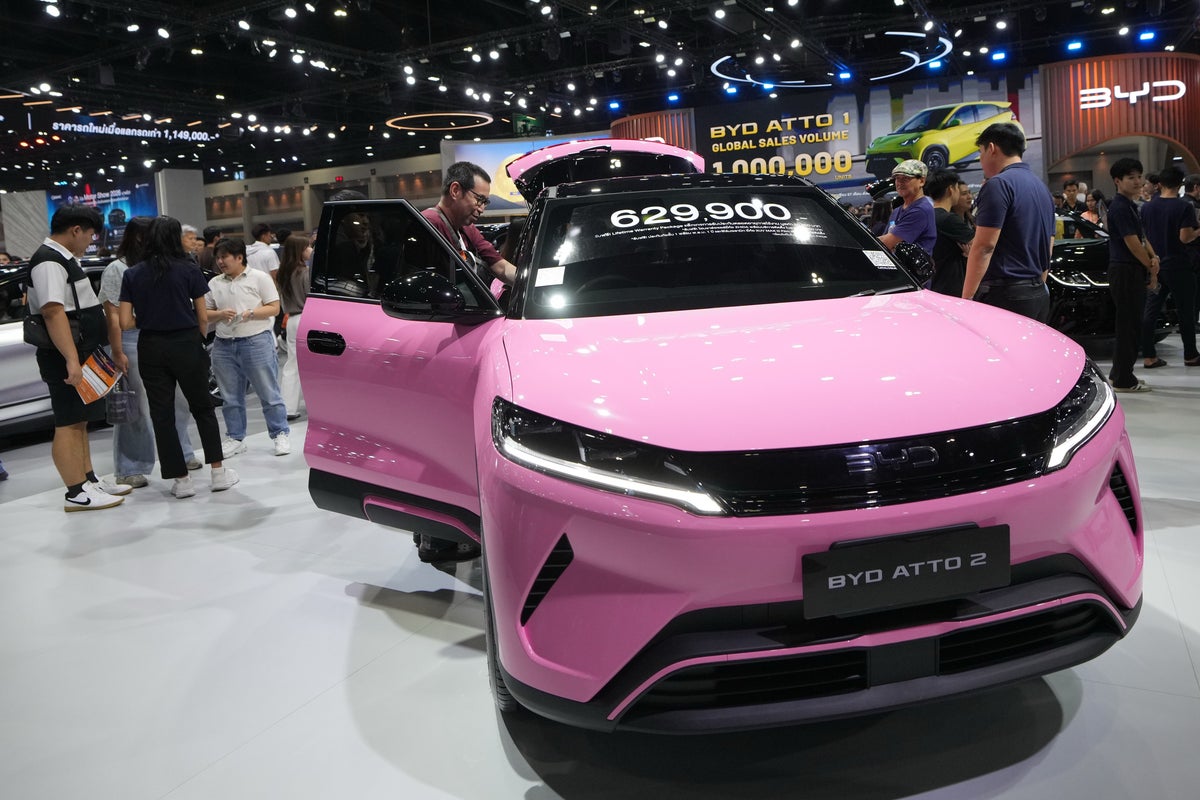
When the price of gas hits $7 a gallon, the response isn't just "buy a BYD." The response is a fundamental restructuring of domestic energy security. For the U.S. and Europe, that means reopening mothballed nuclear plants and fast-tracking domestic mining—moves that actually decouple the West from the Chinese supply chain.
The Geopolitical Blowback
The "China Advantage" narrative ignores the human element of geopolitics. In a world where an Iran-Israel-U.S. conflict has shattered the global energy market, the appetite for "dependency" on a single adversarial supplier disappears.
We are entering the era of "Iron-Curtain Greens."
Governments are no longer looking for the cheapest kilowatt-hour; they are looking for the most secure one. Protectionism is the new global religion. The U.S. Inflation Reduction Act was just the opening salvo. If an energy crisis hits, expect "Clean Energy Nationalization" across the G7. China’s "advantage" of being the world’s workshop is only an advantage if the world is willing to buy what they're selling. In a hot-war scenario, those supply chains are viewed as weapons, not trade opportunities.
Why the "People Also Ask" Sections Are Wrong
You'll see questions like: Will an oil crisis speed up EV adoption?
The honest, brutal answer is: Not in the way you think. EV adoption requires a stable middle class with disposable income and access to cheap credit. An Iran war destroys both. You don't buy a $50,000 electric car when your heating bill has tripled and your 401(k) is cratering. You fix your old Honda and drive less.
Another one: Can China use its rare earth dominance as a lever?
They can, but only once. The moment China weaponizes its supply of neodymium or graphite, the "green" transition is exposed as a strategic trap. The result isn't Western submission; it's the immediate, scorched-earth funding of alternative sources. We saw this in 2010 when China throttled rare earth exports to Japan. Within three years, new mines opened, and recycling tech advanced. Weaponizing your lead is the fastest way to lose it.
The Fragility of the "Winner"
China’s current position is a high-wire act. They are the world’s largest importer of oil and gas. Their "clean tech" sector is a massive hedge against that vulnerability, but it is not a replacement.
Imagine a scenario where the Strait of Hormuz is blocked. China’s internal economy, which still moves largely on diesel and coal, takes a direct hit. Their ability to subsidize the solar and EV sectors evaporates as they scramble to keep the lights on in Shanghai. The "advantage" pundits talk about is a paper tiger. It relies on the U.S. Navy keeping the sea lanes open so China can import the oil it needs to build the panels it wants to sell back to the West.
If the Middle East explodes, the globalization that allowed China to capture the clean tech market dies with it.
Stop Looking at the Topline Numbers
Don't be blinded by the sheer volume of Chinese exports. Look at the return on invested capital. Look at the energy-return-on-investment (EROI).
The West has been lazy, outsourcing the "dirty" work of the green transition to Beijing. But an Iran war ends the luxury of laziness. It forces a brutal repatriation of industry. China isn't "sharpening its advantage"; it is overextending into a market that is about to be redefined by security, not price.
The era of cheap, Chinese-made decarbonization was a product of the long peace. That peace is over. If you're betting on Beijing to dominate the next decade of energy based on their current factory capacity, you aren't paying attention to history. Factories can be built anywhere. Energy security cannot be imported from an adversary during a global meltdown.
The "clean tech" crown is heavy, and right now, the floor beneath Beijing is starting to crack.
Build your own mines. Build your own nukes. The cheap panel era is dead._