A man sits in a cold room in London, his fingers hovering over a keyboard. He wants to talk about a war. He wants to express an opinion about a nation thousands of miles away, its policies, and its soldiers. But he pauses. He has heard the whispers. He has seen the headlines claiming that a single sentence, phrased the wrong way, could lead to a knock at the door. He wonders if the air in Britain has grown thinner, or if the walls have simply moved closer.
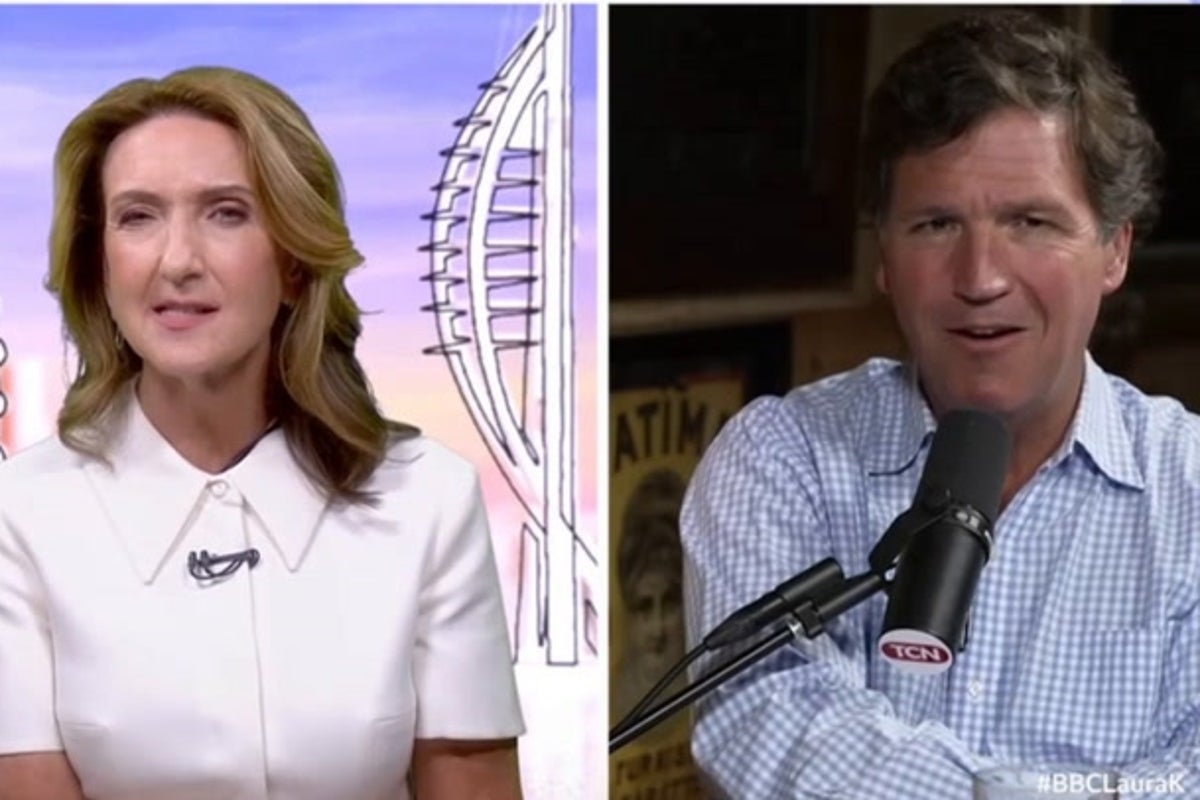
This is the friction of the modern age. It isn't just about what is true; it is about what is permitted. Recently, Tucker Carlson brought this tension to a boiling point, asserting to his millions of followers that it is now effectively illegal in the United Kingdom to criticize the state of Israel. It was a statement designed to shock, a verbal grenade tossed into the already fractured debate over free expression. But beneath the roar of the rhetoric lies a complex, terrifying, and deeply human reality about how we talk to one another in a digital world. Don't forget to check out our previous coverage on this related article.
Britain has never had a First Amendment. There is no ironclad, untouchable right to say whatever one wishes without consequence. Instead, the UK operates on a system of "negative liberty"—you are free to do anything that isn't specifically forbidden. For centuries, this felt like enough. But as the world changed, as the internet turned every private thought into a public broadcast, the British government began to draw lines in the sand.
The Law and the Shadow
The core of the controversy stems from the Public Order Act and various pieces of legislation regarding "hate speech." These laws are not designed to stop political debate, or at least they weren't meant to. They were crafted to prevent the kind of vitriol that leads to violence in the streets. Imagine a woman walking home through a neighborhood where she is a minority, facing a wall of people screaming slurs at her. The law exists to protect her. If you want more about the context of this, The Washington Post provides an in-depth summary.
However, the definition of "hostility" or "hatred" is a shifting target. It is a ghost in the machine. When does a critique of a government's military strategy cross the line into an attack on a protected group?
Carlson’s claim hinges on the idea that the UK’s adoption of certain definitions of antisemitism has effectively silenced any dissent regarding Israel. He points to cases where protesters have been detained or investigated for signs and slogans. To an American observer, used to the absolute protection of even the most offensive speech, this looks like tyranny. To a British prosecutor, it looks like maintaining "community cohesion."
The truth lives in the messy space between those two perspectives.
Consider a hypothetical student at a university in Manchester. Let’s call him Sam. Sam is passionate about human rights. He posts a series of fiery updates on social media, condemning the actions of the Israeli government. He uses harsh language. He calls for boycotts. Under current British law, Sam is likely safe. Political criticism is still a protected part of the democratic process.
But what if Sam uses a trope? What if, in his anger, he uses imagery that invokes ancient, hateful stereotypes? Suddenly, the machinery of the state begins to whir. The police might not arrest him immediately, but they might record a "non-crime hate incident" against his name. This is a black mark that stays on a record, invisible but there, potentially appearing on background checks for future jobs. It is a punishment without a trial, a warning shot fired across the bow of his future.
The Chilling Effect
The real danger isn't always a jail cell. It’s the silence that precedes it.
When people believe that the law is a tripwire, they stop walking. They stop talking. They stop thinking out loud. This is the "chilling effect," a psychological phenomenon where the fear of legal reprisal leads to self-censorship. It turns the public square into a theater of the bland.
In Britain, the police have been seen visiting homes to "check the thinking" of individuals who posted controversial opinions online. Even if no charges are filed, the message is received loud and clear: We are watching. We are listening. Be careful.
This environment creates a strange paradox. While it is not "illegal" to criticize Israel in the sense that there is no specific statute banning the act, the legal framework surrounding hate speech is so broad and so subjectively applied that many feel it might as well be. The ambiguity is the point. If you don't know exactly where the line is, you will stay far, far away from it.
But who draws the line?
In a courtroom, a judge might look at a protest banner and try to determine the intent of the person holding it. But in the heat of a street protest, a police officer has to make that call in seconds. They are under immense pressure to prevent escalation. Sometimes, they overreach. Sometimes, they see a threat where there is only a grievance. These moments of overreach become the fodder for international commentary, fueling the narrative that Britain has abandoned its heritage of liberty.
The Invisible Stakes
Why does this matter to someone who isn't a political activist? Why should the average person, concerned with rising rent and the price of milk, care about whether Tucker Carlson is right or wrong?
Because speech is the canary in the coal mine.
When we lose the ability to speak freely about the most contentious issues of our time, we lose the ability to solve them. Conflict requires dialogue. It requires the venting of frustration and the clashing of ideas. When that venting is forced underground, it doesn't disappear. It compresses. It gets hotter. It becomes explosive.
We are living through a period of profound global instability. The images coming out of the Middle East are heartbreaking, visceral, and polarizing. People feel a desperate need to bear witness, to scream into the void, to demand change. If the law tells them their screams are a crime, they will eventually find other ways to be heard.
There is a deep, human need to feel that our thoughts are our own. The moment we start looking over our shoulders before we speak, we have lost something essential to our dignity. It is the feeling of being a child again, waiting for a parent to tell us what is "naughty" and what is "nice." But the state is not a parent, and its citizens are not children.
The Fragility of the Square
The British government maintains that its laws are necessary to protect the vulnerable. They argue that in a diverse, modern society, words can be weapons. They aren't entirely wrong. We have seen how online radicalization can lead to real-world tragedy. The challenge—the impossible task—is to find the balance.
But the balance is currently tipping.
The move toward policing "offensive" speech rather than just "incitement to violence" is a fundamental shift. Offense is a feeling. It is internal. It is different for every person who walks the street. By making "offense" a matter for the police, the state has entered the realm of psychology. It is trying to regulate the emotional response of its citizens.
This is what Carlson is tapping into. He is speaking to a growing sense of unease that the institutions meant to protect us have become obsessed with controlling us. Whether his specific claim about the legality of criticizing Israel is a factual bullseye or a hyperbolic stretch, it resonates because it feels true to many people’s lived experience of the current climate.
They see a woman arrested for silently praying near an abortion clinic. They see a man questioned for a tweet about a trans activist. They see the police prioritizing social media posts over residential burglaries. In that context, the idea that certain political criticisms are being criminalized doesn't seem like a conspiracy theory. It seems like the next logical step.
The Weight of the Word
Imagine that man in London again. He deletes his post. He decides it isn't worth the risk. He goes back to scrolling, watching videos of cats or recipes for sourdough.
On the surface, nothing has changed. The streets are quiet. There are no riots. The government can point to its statistics and say that community relations are stable.
But something has died. A tiny, vital piece of the democratic experiment has flickered out. Multiply that man by a million, and you have a society that has forgotten how to be brave. You have a culture that values comfort over truth, and safety over soul.
The law can mandate silence, but it cannot mandate respect. It can ban a slogan, but it cannot ban a grievance. In the end, the attempt to legislate away the friction of human disagreement only serves to make the world a more brittle place.
The border where speech becomes a crime is not a line on a map. It is a line drawn through the human heart. And once we cross it, there may be no coming back.
The man closes his laptop. The room is still cold. The silence is no longer a peace; it is a weight. He wonders if anyone else feels it. He wonders if anyone is still allowed to ask.