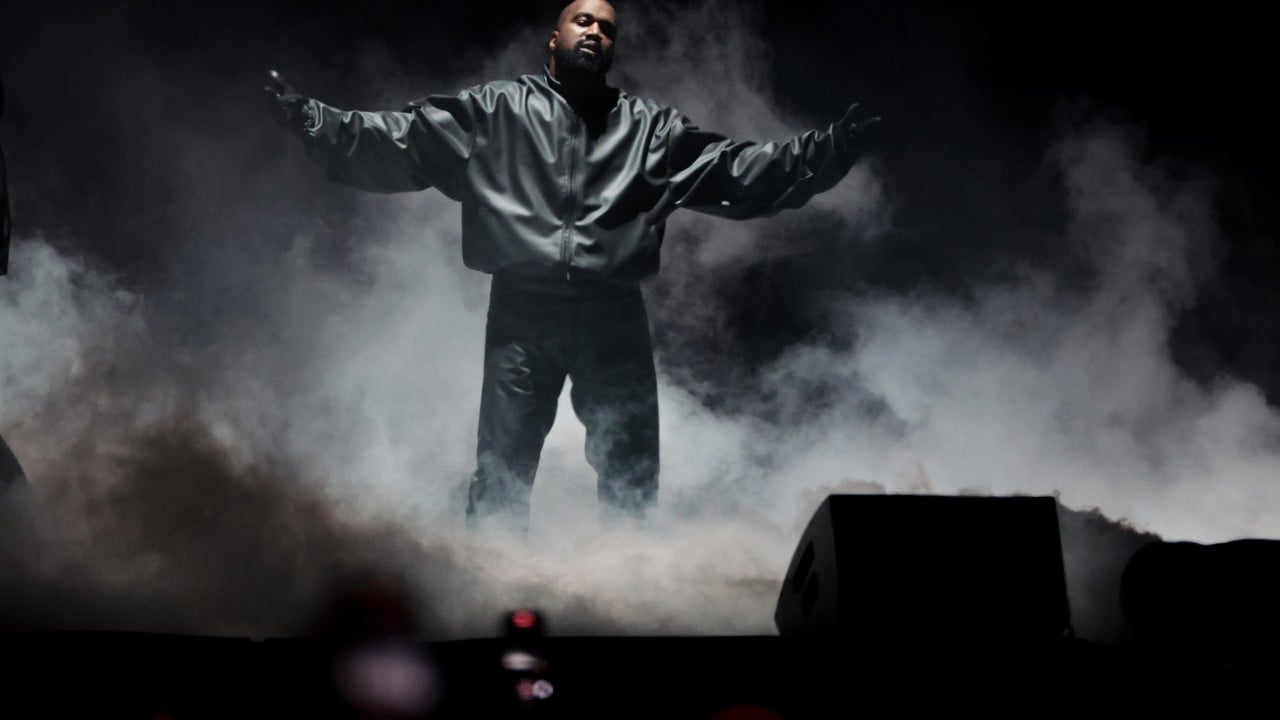
The French political class is currently engaged in a performative dance of moral signaling that is as predictable as it is pathetic. When a minister stands up to demand the cancellation of a Kanye West concert in Marseille, they aren't protecting the public. They are confessing their own cultural obsolescence. They are trying to treat a wildfire with a spray bottle of perfume.
Standard media coverage focuses on the "risk to public order" or the "unacceptability of his rhetoric." That is the lazy consensus. It frames the issue as a simple binary: you either support hate speech or you support safety. This binary is a lie. By attempting to ban West, the French government isn't stopping a "dangerous" message. They are actually providing him with the exact oxygen his brand requires to survive. They are validating the very "persecution" narrative he sells to millions.
The Censorship Paradox
Banning a performer doesn't erase their influence. It concentrates it. When you tell a generation of hyper-connected youth that a specific individual is too "dangerous" to be seen, you aren't protecting them. You are making that individual the most relevant person on the planet.
In the digital age, a physical concert is just a nodes in a network. The music is already there. The ideas are already there. By banning the physical gathering, the state effectively admits it has lost control of the digital space. It is a desperate grasp for power by an institution that no longer understands how culture flows.
Let’s be clear about the mechanics here. Kanye West’s current business model—if we can call the chaotic output of a self-immolating billionaire a "model"—relies entirely on friction. He feeds on opposition. When Adidas dropped him, he didn't disappear; he became a martyr for a specific subset of the internet. When a French minister calls for a ban, they are effectively acting as his unpaid PR agent. They are the "Goliath" to his "David," even if his David is currently spewing incoherent nonsense.
The Myth of Marseille's Fragility
The argument that a Ye concert would "disrupt public order" in Marseille is an insult to the city. Marseille is a city built on complexity, grit, and a centuries-long history of absorbing disparate influences. To suggest that a single musician, regardless of how controversial his recent statements have been, could tip the city into chaos is a staggering display of paternalism.
It assumes the citizens of Marseille are mindless vessels, unable to hear a song without immediately adopting the worldview of the person singing it. This is the "Magic Bullet" theory of communication—the idea that media messages are injected directly into a passive audience. It was debunked in the 1940s, yet politicians still cling to it because it justifies their existence as moral gatekeepers.
I have spent years watching the intersection of live events and political optics. I’ve seen festivals shut down for "security" reasons that were actually about local zoning disputes. I’ve seen "dangerous" rappers banned from venues only for the resulting underground shows to become far more volatile than a regulated stadium concert ever would have been. When you drive an event underground, you lose the ability to provide the very security you claim to be worried about.
The Revenue of Outrage
Follow the money. Who actually benefits from a ban?
- The Politician: They get a week of headlines. They look "tough" on extremism without having to pass a single piece of meaningful legislation.
- The Artist: Kanye West thrives on being the "outcast." A ban in France is a badge of honor he will wear in his next three-hour rant. It fuels the "them vs. me" rhetoric that keeps his core audience buying $200 socks.
- The Media: Outrage generates clicks. A peaceful concert is a local news story. A banned concert is a global event.
Who loses? The local economy of Marseille. The vendors, the security staff, the hotels, and the thousands of fans who—believe it or not—might actually just want to hear "Runaway" in a stadium setting.
We need to stop pretending that every cultural event is a referendum on the artist's soul. If we applied the "French Minister Standard" to every performer, the stadiums of Europe would be empty. Are we checking the tax records of every DJ? The private messages of every pop star? The historical accuracy of every opera? No. We pick and choose based on who is the easiest target for the current news cycle.
The Slippery Slope of Political Taste
If the state can ban a concert because they dislike the artist's recent interviews, where does the line move next? Is it a ban on books? A ban on specific social media accounts? Oh wait, they’re already trying that too.
The moment you allow a government official to decide what art is "safe" for the public to consume, you have already lost the battle for a free society. The "nuance" that the mainstream media misses is that you can find Kanye West’s recent comments abhorrent and still find the government’s attempt to silence him even more dangerous.
Imagine a scenario where a right-wing government bans a leftist artist because their lyrics "incite class warfare." Or a secular government banning a religious singer because their message is "divisive." The precedent being set in Marseille is a tool that will eventually be used against the very people currently cheering for the ban.
The "People Also Ask" Reality Check
People often ask: "Shouldn't hate speech have consequences?"
Yes, it should. And it has. Kanye West has lost billions in net worth. He has lost his primary distribution partners. He has been socially ostracized by almost every major institution in the West. Those are the consequences of the market and social contracts.
But a state-mandated ban on a performance is not a "consequence." It is an act of censorship. There is a massive difference between a private company (like Adidas) choosing not to work with someone and a government using the police power of the state to prevent a citizen from gathering with others to hear music.
Another common question: "What about the safety of the Jewish community in Marseille?"
Protection is provided through security, not silence. If there are specific, credible threats of violence, you deploy police. You don't cancel the event. Canceling the event does nothing to address the underlying tensions; it merely sweeps them under the rug where they can fester and grow. It reinforces the idea that the state is afraid of ideas. And nothing emboldens a radical more than the fear of the establishment.
The Intellectual Laziness of the Ban
It is much easier to ban a concert than it is to address why people are drawn to radical figures in the first place. It is easier to sign a decree than to engage in the difficult work of cultural education and community building. The ban is the "fast food" of governance—it feels satisfying for a moment, but it provides zero nutritional value for the body politic.
We are witnessing the death of the "Public Square." Instead of a space where ideas—even bad ones—are contested and defeated, we are building a series of walled gardens where the government decides who gets to speak.
If Kanye West is truly as irrelevant and "over" as the critics claim, then let him play to a half-empty stadium. Let the market decide. Let the people of Marseille vote with their wallets. But the politicians know he wouldn't play to a half-empty stadium. They know it would be sold out. And that is what actually scares them. They aren't afraid of his hate; they are afraid of his reach.
Stop Trying to Protect Us
The French government needs to stop acting like a nervous parent. The public is capable of hearing a song without becoming a radical. We are capable of separating the art from the artist, or choosing not to, without a minister's guidance.
This ban isn't about safety. It isn't about morality. It is about a fading political class trying to prove they still have the power to turn off the lights. But the lights are already on everywhere else. You can't kill a ghost by locking the door of the room it used to live in.
If you want to fight bad ideas, use better ones. If you want to stop a performer, don't buy a ticket. But don't ask the state to play the role of the ultimate critic. They are terrible at it, and the ticket prices are way too high.
Let the man play, or let him fail on his own merits. Anything else is just a state-sponsored publicity stunt.
Stop treating the audience like children and start treating the state like the overreaching entity it has become.