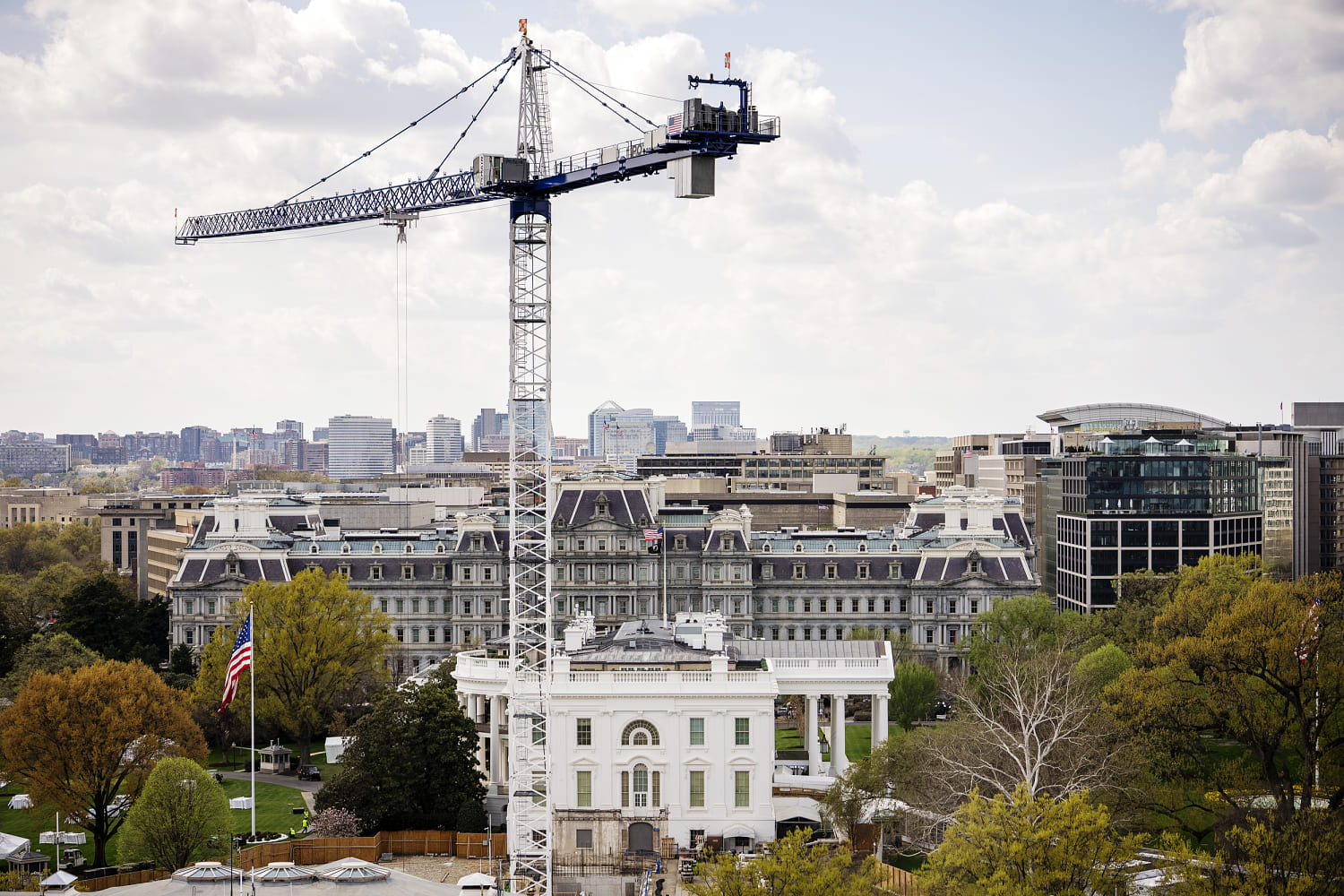
The D.C. Circuit Court of Appeals just handed the White House a "win" by allowing construction on the East Room ballroom to grind on through June. The media is treatng this like a constitutional crisis or a victory for executive power. They are wrong. They are falling for the oldest trick in the beltway playbook: the tactical distraction.
While activists scream about historical preservation and critics howl about taxpayer waste, the real story isn't the drywall. It’s the fact that we are arguing about a floor plan while the structural integrity of governance is rotting from the inside. This legal battle is a staged drama designed to make the executive branch look busy and the judicial branch look relevant.
The Preservationist Fallacy
The loudest argument against the construction is that it "erodes the historical fabric" of the White House. This is sentimentality masquerading as logic.
Buildings are tools. When a tool no longer serves its purpose, you sharpen it or you replace it. The White House isn’t a museum; it is a high-functioning command center. I’ve seen corporate CEOs try to run modern operations out of "legacy" headquarters that were essentially golden cages. Efficiency dies in those spaces.
The idea that we must freeze a building in time because a previous administration breathed there is a recipe for stagnation. If we applied the "preservationist" logic to any other industry, we would still be using switchboards for telecommunications.
- The Cost Myth: Critics cite the $45 million price tag as an outrage. In the context of a $6 trillion federal budget, that is a rounding error. It’s the equivalent of a homeowner worrying about the cost of a single brass screw while the house is being foreclosed.
- The June Deadline: The court allowing work to continue into June is being framed as a "compromise." It’s actually a stay of execution for a project that should have been finished six months ago if not for bureaucratic red tape.
Legal Theater and the Illusion of Oversight
The appeals court isn't protecting the law; it’s protecting its own image. By issuing a ruling that allows construction but keeps the case on the docket, the court maintains a seat at the table. It’s a power grab disguised as a procedural review.
We are seeing a trend where the judiciary intervenes in mundane administrative tasks to assert dominance. This isn't about the ballroom. It’s about setting a precedent that the court can pause any executive action at a whim. If you can sue to stop a floor being laid, you can sue to stop a trade deal or a military deployment.
This is the "Administrative Chokehold." I saw it happen in the tech sector during the mid-2010s when patent trolls used minor injunctions to freeze multi-billion dollar product launches. The goal wasn't to win the case; the goal was to extract a price for the delay. Here, the price is political capital.
The Secret Benefit of Construction Noise
Ask yourself: why does the White House want this renovation so badly right now?
It isn't about hosting foreign dignitaries in a prettier room. It’s about the "Noise Floor." In intelligence circles, physical construction provides the perfect cover for technical sweeps, hardware upgrades, and the installation of secure communication lines that can't be easily bugged.
When you see "ballroom construction," you should be thinking "SCIF (Sensitive Compartmented Information Facility) upgrades." The public is arguing about drapes and parquet floors while the administration is likely hardening the most important room in the building against modern signals intelligence.
The media’s focus on the aesthetic impact is exactly what the security teams want. It is a classic shell game.
The Failure of Professional Critics
The pundits complaining about this project are the same ones who haven't stepped foot in a construction site in their lives. They operate in the world of "should be" rather than "is."
They argue that the "optics" are bad during an election cycle. Since when did we start prioritizing "optics" over the functional requirements of the executive branch? This obsession with how things look over how they work is why our infrastructure is crumbling.
I’ve worked with developers who tried to appease every neighborhood board and "concerned citizen" group. The result? Projects that take ten years to build and cost triple the budget. The White House is the ultimate "Not In My Backyard" (NIMBY) project, except the "backyard" belongs to 330 million people who all think they are the architect.
The Real Risks Nobody Mentions
While I support the renovation, the contrarian truth is that the White House is doing it wrong—not because they are building, but because they are being too transparent about it.
- Supply Chain Vulnerability: By making this a public legal battle, every contractor, every sub-contractor, and every source of material is now a target for foreign intelligence.
- Timeline Rigidity: The June deadline creates a rush. In high-end construction, "fast" is the enemy of "secure." If you force a crew to finish by a court-mandated date, they cut corners. In a private residence, a cut corner means a drafty window. In the White House, it means a vulnerability.
Stop Asking if They Should Build
The question isn't whether the ballroom should be renovated. The question is why we have allowed the legal system to become so bloated that a simple interior remodel requires an appellate court ruling.
We have reached a point where the process is more important than the product. This case is a symptom of a litigious society that has lost the ability to execute. If the White House—the literal seat of power—cannot paint a room without a three-judge panel weighing in, what hope does a small business owner have?
The "lazy consensus" says this is a win for the administration. It isn't. It's a humiliating display of how weak the executive has become. They had to beg for permission to finish a renovation on their own house.
If you’re still focused on the ballroom, you’ve already lost the plot. The real story is the cage we’ve built around the ability to actually get things done.
Stop reading the headlines about "victory" and start looking at the shackles.