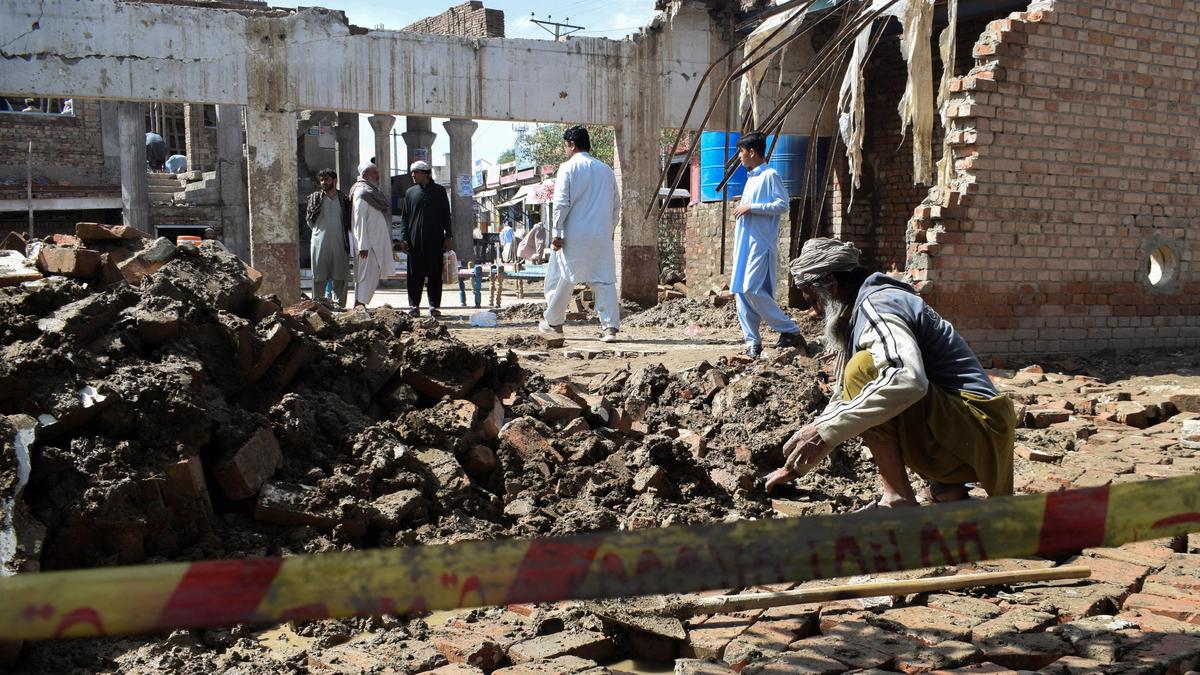
The death of 45 individuals across Afghanistan and Pakistan following recent torrential rains is not a localized tragedy but a predictable failure of the region’s coupled atmospheric and structural systems. In these geographies, precipitation acts as a stress test for fragmented urban planning and degraded rural ecosystems. When rainfall exceeding seasonal norms hits these specific topographical corridors, the result is a lethal confluence of flash flooding, structural collapse, and lightning strikes. Analyzing this event requires moving beyond the "natural disaster" narrative and into a forensic examination of the three primary vectors of mortality: hydrological surges, structural integrity failure, and electrical atmospheric discharge.
The Hydrological Trap Flash Flooding and Topographic Acceleration
The primary driver of the 45 reported fatalities is the lack of hydraulic buffering in the Hindu Kush and surrounding plains. Flash flooding in this region operates on a specific kinetic curve. Because the soil in arid and semi-arid zones often undergoes crusting during dry spells, its infiltration capacity—the rate at which soil absorbs water—is significantly reduced. You might also find this connected story interesting: The $2 Billion Pause and the High Stakes of Silence.
When a high-intensity storm system moves in, the runoff coefficient approaches 1.0, meaning nearly all precipitation becomes surface flow. In narrow mountain valleys, this water gains velocity exponentially. The destruction seen in Afghanistan’s provinces, such as Kandahar and Herat, stems from this "canyon effect" where water is funneled into high-velocity torrents that transport heavy debris, turning liquid flow into a battering ram capable of shearing off bridge supports and residential foundations.
The second limitation is the lack of early warning systems (EWS) that reach the "last mile" of rural populations. While satellite data can predict large-scale weather fronts, the micro-scale localized bursts that cause the most deaths are often missed or communicated too late to allow for vertical evacuation—moving to higher ground or reinforced structures. As highlighted in recent coverage by The New York Times, the effects are widespread.
The Structural Fragility Index Why Rain Becomes Fatal
Rain itself rarely kills; the failure of the built environment does. In Pakistan’s Khyber Pakhtunkhwa province and various Afghan districts, the predominant construction material is unreinforced masonry or sun-dried mud bricks (katcha houses).
The Saturation-Collapse Mechanism
Mud-brick structures possess high thermal mass but zero water resistance. The failure follows a predictable sequence:
- Saturation: Rainwater penetrates the porous exterior, increasing the dead load of the walls.
- Loss of Cohesion: The binding clay reaches its liquid limit and loses shear strength.
- Compromised Footings: Water pools at the base, eroding the foundation until the center of gravity shifts.
- Sudden Failure: Unlike modern steel-framed buildings that may lean or crack, mud structures suffer catastrophic, total collapse, often trapping occupants under tons of wet earth.
This structural vulnerability is compounded by the lack of drainage infrastructure. In urban fringes, informal settlements are often built in natural drainage paths or "nullahs." When these paths are blocked by refuse or unauthorized construction, the water backs up, creating stagnant pressure zones that further weaken the foundations of surrounding buildings.
Lightning and the Atmospheric Variable
A significant, though often overlooked, percentage of the 45 casualties resulted from lightning strikes. This is a direct consequence of the regional topography and labor patterns. The interaction between moist air masses from the Arabian Sea and the cold, dry air of the Himalayas creates high vertical instability. This leads to the formation of cumulonimbus clouds with massive electrical potential.
In rural Pakistan and Afghanistan, the labor force is largely agricultural and outdoors. The lack of grounded structures in open fields makes farmers and shepherds the highest-risk demographic. Without lightning rods or accessible "Faraday cage" shelters (like metal vehicles), these individuals become the most prominent conductors in an open landscape.
The Economic Feedback Loop of Recovery Failure
The deaths are the immediate metric, but the second-order effects ensure that the mortality rate remains high in subsequent weeks. The destruction of crops and livestock in regions already facing food insecurity creates a caloric deficit that weakens the population against waterborne diseases.
The Cost Function of Infrastructure Neglect
The financial burden of rebuilding is often cited as the reason for substandard infrastructure, but the "Reactionary Cost" far outweighs the "Preventative Investment."
- Preventative Investment: Hardening 1,000 homes against moisture and installing community-level drainage.
- Reactionary Cost: Emergency medical response, food aid for displaced thousands, loss of agricultural GDP, and the total replacement of destroyed infrastructure.
The current strategy in both nations relies heavily on post-facto disaster management—deploying army units and rescue teams after the damage is done. This creates a bottleneck in efficiency. A more robust approach would involve the systematic mapping of "High-Risk Hydro-Zones" and the forced relocation of populations from the most volatile floodplains.
Regional Geopolitics as a Barrier to Climate Resilience
The border between Afghanistan and Pakistan is one of the most volatile in the world, yet it shares a single, integrated watershed. The lack of data-sharing between the two nations regarding upstream water levels and storm tracking is a systemic failure.
In a functioning transboundary water management system, upstream gauges in Afghanistan would provide hours of lead time for downstream communities in Pakistan. Currently, this communication is non-existent or filtered through slow, high-level diplomatic channels. This data silo is a lethal inefficiency. The atmosphere does not recognize the Durand Line, yet the disaster response frameworks of both nations remain strictly siloed, preventing a coordinated evacuation strategy that could have reduced the death toll significantly.
The Shift Toward Modular Resilience
The persistent recurrence of these mass casualty events suggests that traditional large-scale infrastructure projects (like massive dams or concrete embankments) are too slow to implement and too expensive to maintain in the current political climate. The strategy must shift toward "Modular Resilience."
This involves:
- Distributed Power and Comms: Solar-powered, localized sirens that trigger based on automated soil moisture and rainfall sensors.
- Structural Retrofitting: Using lime-stabilized earth or simple cement plastering on traditional mud homes to increase water resistance.
- Managed Retreat: Identifying the top 5% of most dangerous flood channels and converting them into permanent green-zones where habitation is strictly prohibited.
The current casualty count of 45 is a baseline figure that will likely rise as remote areas are surveyed. This isn't an anomaly of nature; it is the friction between a changing climate and a static, vulnerable civilization. The only viable path forward is to treat weather events as a hard engineering problem rather than a humanitarian crisis. The transition from reactive rescue to proactive structural hardening is the difference between manageable seasonal rain and a regional catastrophe.


