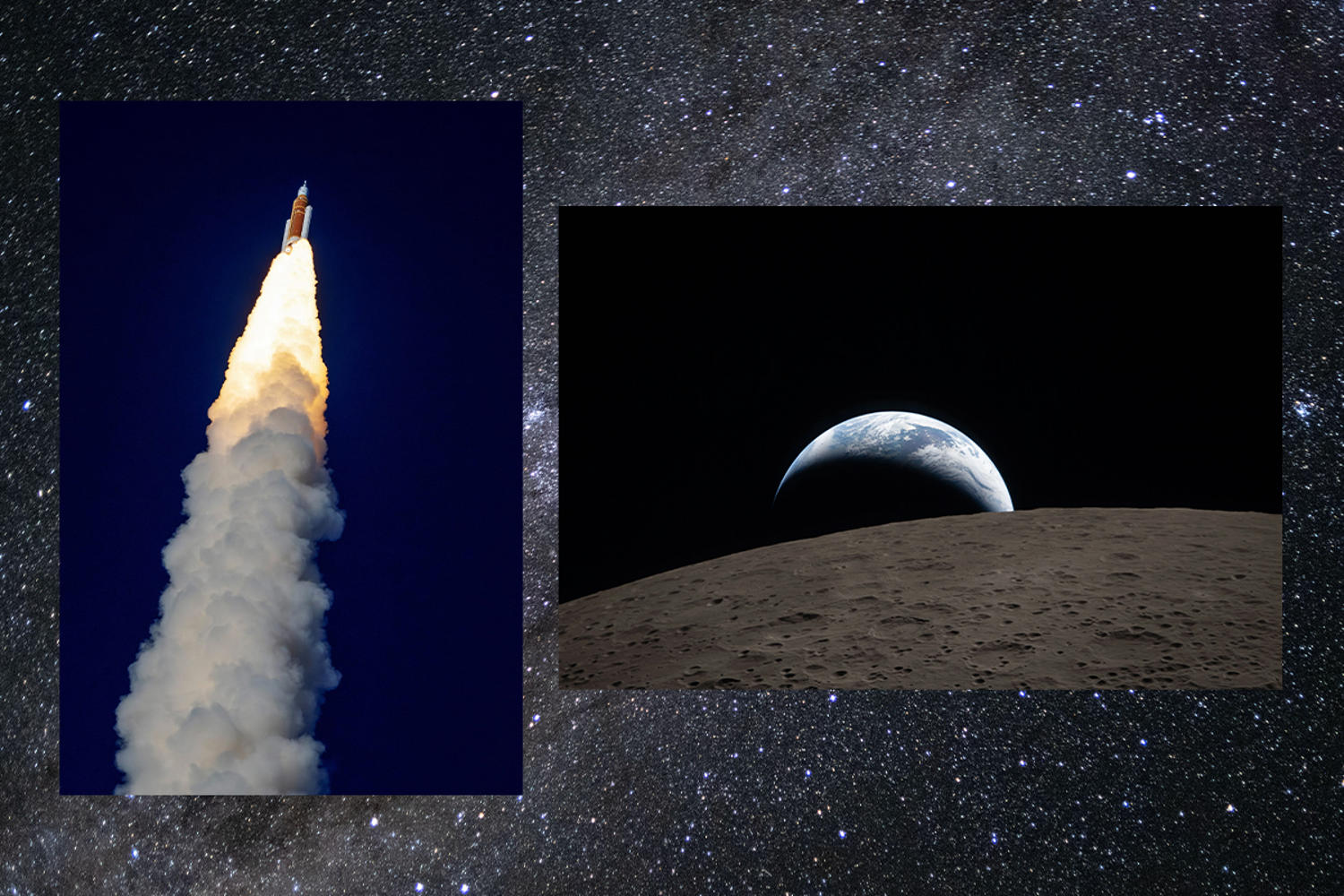
We waited fifty years to see the Moon like this again. When the Artemis I mission finally cleared the launchpad in late 2022, it wasn't just about testing a massive rocket or a shiny new capsule. It was about the eyes. For decades, our visual record of the lunar surface was trapped in the grain and grit of 1970s film—iconic, sure, but limited. Artemis changed the game by bringing modern optics to the lunar backyard.
You’ve probably seen the "Earthrise" shots before. But the images sent back by the Orion spacecraft are different. They aren't just pretty pictures; they are high-stakes data points that prove we can actually survive the trip back. If you think this was just a PR stunt, you're missing the point. These photos represent the bridge between the analog past of Apollo and a future where humans stay on the Moon for good.
The High Definition Reality of the Lunar Far Side
Most of us grew up seeing the Moon as a flat, gray disc. That’s because the Moon is tidally locked to Earth. We only ever see one side. During the Artemis I mission, Orion traveled further than any spacecraft built for humans ever has—nearly 270,000 miles from home. It swung around the far side of the Moon, capturing images that make the Apollo-era shots look like sketches.
The far side is rugged. It’s beat up. Unlike the "near side" with its wide, dark plains called maria, the far side is a chaotic mess of craters and highlands. Orion’s cameras caught these details in stark, unforgiving light. You can see the depth of the impact basins and the sharp shadows cast by crater rims that haven't been touched by wind or water for billions of years.
NASA didn't just bolt a GoPro to the side of the ship. They used sixteen different cameras. Some were designed for engineering, tracking how the solar arrays moved, while others were there to navigate by the stars. The result is a visual diary of a 1.4-million-mile journey that feels intimate. You see the curve of the Orion capsule in the foreground, reminding you that this isn't just a satellite. It’s a seat waiting for a pilot.
Why We Stop and Stare at the Blue Marble
There’s a specific photo from the mission that keeps showing up in textbooks. It shows the Orion spacecraft in the foreground, the Moon’s curved limb below it, and a tiny, fragile-looking Earth hanging in the blackness of space. It’s a perspective check.
In that shot, the Earth looks small. Almost insignificant. It’s a reminder that everything we know—every war, every discovery, every person you've ever met—is sitting on that little blue dot. When Frank Borman and the crew of Apollo 8 took the original Earthrise photo in 1968, it sparked the modern environmental movement. The Artemis version does something different. It shows us as a multi-planetary species in the making.
The clarity is what hits you. You aren't looking at a blurry blue marble. You can see weather patterns. You can see the deep blue of the Pacific. It makes the distance feel real. It makes the risk feel real. Space is big, and Orion’s "selfies" with Earth prove just how far we’ve come from the safety of low Earth orbit.
Technical Muscles and Optical Wins
Building a camera system that works in deep space is a nightmare. It's not just the vacuum. It's the radiation. High-energy particles from the sun can fry a standard digital sensor in days. NASA had to ensure these cameras could survive the trip through the Van Allen radiation belts and the extreme temperature swings of space.
The "optical navigation" camera was a standout. It wasn't just there for the views. It took photos of the Earth and Moon to help the onboard computer figure out exactly where the ship was located. This is a backup system. If the ship loses communication with ground control, it can "see" its way home by calculating its position relative to the celestial bodies it photographs.
- The GoPro Factor: Several cameras were off-the-shelf models, heavily modified to survive the vibration of launch and the cold of the shadows.
- The Selfie Wings: Each of the four solar arrays had a camera at the tip. This allowed NASA to inspect the entire exterior of the craft without needing a spacewalk.
- The Re-entry Record: Cameras inside the cabin watched "Commander Moonikin Campos," a sensor-laden mannequin, to see how the forces of re-entry would affect a human body.
The Brutality of the Splashdown
The mission ended with a literal bang. Orion hit the Earth’s atmosphere at 25,000 miles per hour. That’s Mach 32. The heat shield had to handle 5,000 degrees Fahrenheit—about half as hot as the surface of the sun. The photos from this phase are terrifying. You see the plasma trail outside the windows, a glowing orange shroud that cuts off all radio contact.
Then, the chutes. Seeing three massive orange-and-white parachutes unfurl over the Pacific is a sight that never gets old. It’s the moment of relief. The images of the charred capsule bobbing in the waves are some of the most important of the mission. They show a "used" spacecraft that did its job. Orion came home scarred, but intact.
The heat shield didn't perform exactly as some engineers expected; it lost more material in small chunks than the models predicted. This is why we fly uncrewed missions first. These photos allowed teams to analyze the charring patterns and adjust the shield for Artemis II, which will carry a real crew.
What You Should Do Now
Don't just look at these photos on a tiny phone screen. To appreciate what's actually happening, you need to see the full-resolution files. NASA hosts the entire Artemis I gallery on Flickr and their official image servers. Most are available in 4K or higher.
Look at the edges of the craters. Look at the texture of the lunar dust. These aren't just "the best photos" from a mission; they're a preview of what you’ll see when humans step back onto the surface in a couple of years. If you want to stay updated on the next leg of the journey, keep an eye on the progress of the SLS core stage for Artemis II. It's already being prepped. We aren't just visiting anymore. We're moving in.
Go find the high-res shot of the "Crescent Earth" rising over the lunar horizon. Set it as your desktop background. Remind yourself that we’re living in an era where going to the Moon isn't a memory from our grandparents' time—it's something happening right now. The hardware is real, the photos are spectacular, and the next set of footprints is only a few years away.