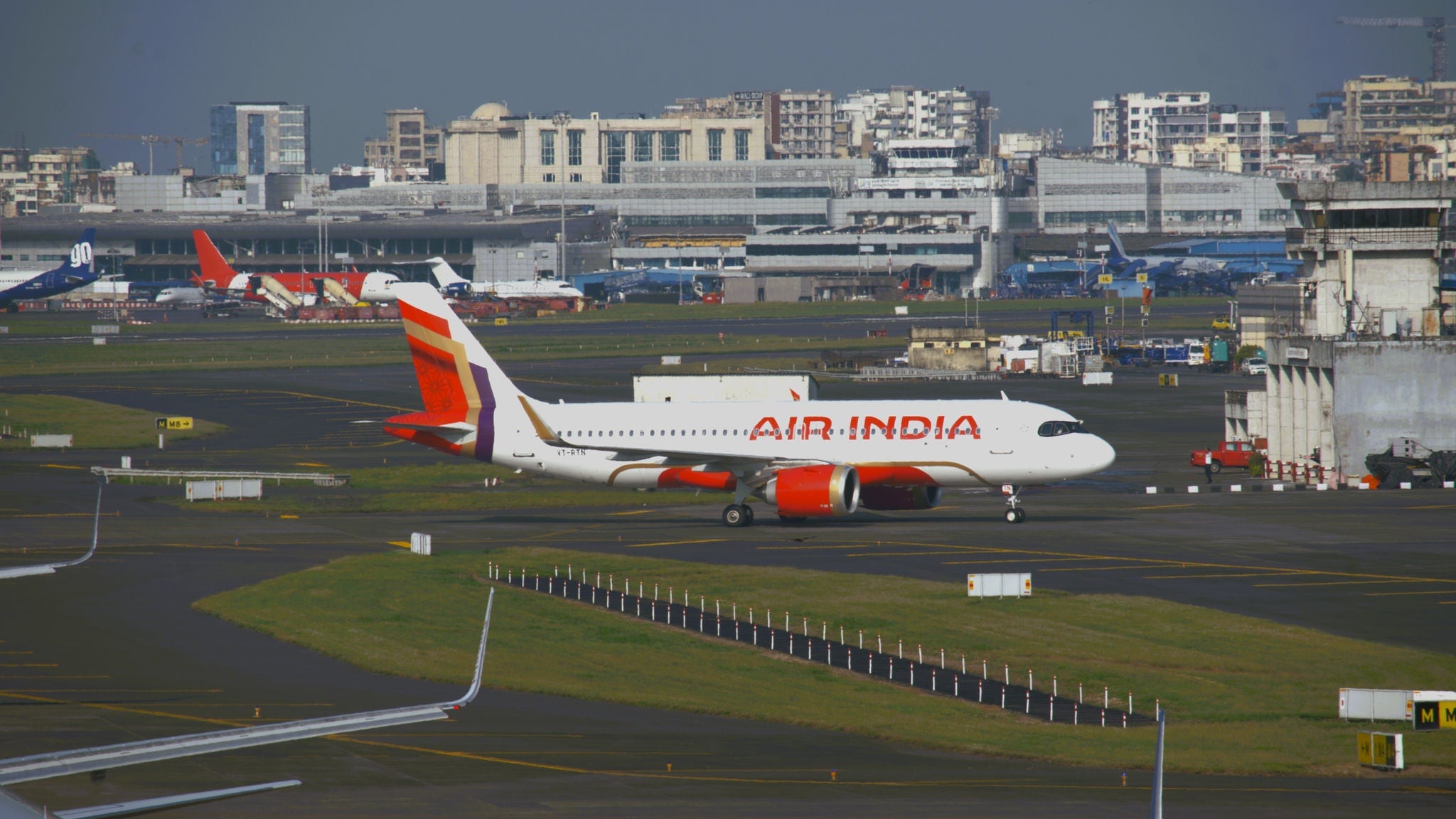
Air India has grounded all flights to Tel Aviv through May 31, 2026, a move that effectively severs the direct air bridge between New Delhi and the Mediterranean. While the official statement cites the escalating "situation in West Asia," the reality is a complex mix of soaring insurance premiums, unusable flight paths, and a direct military confrontation between Israel and Iran that has turned the Persian Gulf into a no-fly zone for commercial metal. For the 40,000 Indians living in Israel, this is not just a schedule change. It is a blockade.
The suspension is the latest in a series of stop-start operations that have defined the Delhi-Tel Aviv route since the conflict widened on February 28. On that day, an Air India Boeing 787 Dreamliner was forced to perform a mid-air U-turn over the Arabian Sea, returning to Mumbai after Israeli airspace was abruptly sealed during a missile exchange. That incident was the final straw for risk assessors at the airline’s headquarters.
The Invisible Wall in the Air
Airlines do not just fly from point A to point B. They navigate a shifting maze of Flight Information Regions (FIRs). The current war has rendered the traditional "Great Circle" route between India and Israel almost impossible to navigate safely. Usually, these flights utilize a corridor that avoids the most volatile zones, but the entry of Iran into active hostilities has created a geopolitical pincer.
Flying north through Central Asian airspace adds hours to the journey, consuming thousands of extra kilograms of Jet A-1 fuel. Flying south requires navigating the narrow neck of the Red Sea, which is currently plagued by separate maritime and aerial threats. When a flight time increases by two hours, the fuel burn alone can turn a profitable route into a massive financial drain. Air India is currently staring at a projected industry-wide loss of ₹180 billion for Indian carriers as fuel costs and the sliding rupee collide with these forced detours.
The Insurance Deadlock
Security is the stated reason for the suspension, but the balance sheet is the silent driver. War risk insurance for aircraft is not static. When missiles begin striking near Ben Gurion Airport, the cost of insuring a $200 million Dreamliner for a single landing in Tel Aviv can skyrocket to ten times the standard rate. In some cases, underwriters simply refuse to provide "hull-and-machinery" coverage for specific destinations.
Israeli carriers like El Al and Arkia continue to fly because they are backed by sovereign guarantees—essentially, the Israeli government acts as the insurer of last resort. Air India, now a private entity under the Tata Group, does not have that luxury. Every flight into a conflict zone is a calculated gamble with an asset that the company cannot afford to lose.
The Stranded Diaspora
The human cost is centered on the Indian community in Israel, largely comprised of caregivers, construction workers, and students. With Air India out of the picture, these travelers are forced into expensive, multi-leg journeys through Jordan or Egypt.
- Land Crossings: Many are trekking to the Sheikh Hussein Bridge to enter Jordan, hoping to catch flights out of Amman.
- The Monopoly Effect: With international competition gone, the few remaining carriers serving Tel Aviv have seen ticket prices triple.
- Mission Support: The Indian Embassy in Tel Aviv has opened a 24x7 emergency line, but they cannot manufacture plane seats where none exist.
A Strategic Setback for India-Israel Ties
Beyond the immediate travel chaos, the suspension stalls a burgeoning economic partnership. Before the 2026 escalation, the Delhi-Tel Aviv route was a corridor for defense contractors, agri-tech experts, and startup founders. This connectivity was a pillar of the I2U2 (India, Israel, UAE, USA) cooperation framework.
Every day the flights remain suspended, project timelines in the Negev desert or the tech hubs of Haifa slip. While maritime routes remain an option, they are too slow for the "just-in-time" requirements of modern defense and technology sectors. The "shut sky" is not just a logistical hurdle; it is a cooling of the economic engine that has driven bilateral trade to record highs in recent years.
The Long Road to June
Air India’s decision to wait until June 1 to re-evaluate suggests they do not expect a cooling of tensions during the traditional spring surge in travel. The airline is currently notifying passengers with confirmed bookings, offering full refunds or one-time rescheduling. However, for those who need to move now, a refund is a poor substitute for a boarding pass.
The carrier’s caution is mirrored by other global giants like United and Lufthansa, who have similarly retreated. In the hyper-competitive world of aviation, leaving a route is easy, but reclaiming it—and the trust of the frequent flyer—is a much longer journey. The sky over the Middle East remains a volatile canvas, and for now, India’s "Maharajah" has decided that the only safe move is to stay on the ground.


